The Next Big AI Investment Question

Artificial intelligence has been one of the most powerful investment themes of the decade, but lately investors have begun questioning the profits that will come from it. Their concerns matter. Many of the world's largest technology companies are spending extraordinary amounts of capital building data centers, purchasing semiconductors, and developing increasingly sophisticated AI models. Until recently, markets largely rewarded that spending as evidence of leadership in what could become a transformational technology. More recently, investors have shown greater uncertainty about what type of returns those investments will eventually produce.
AI-related risks have contributed to volatility across technology stocks as of late. The concern is not necessarily that artificial intelligence has failed to live up to expectations. Instead, the debate is increasingly about the economics underlying it. AI may become extraordinarily valuable while simultaneously proving less profitable for some of the companies developing the technology than investors originally expected.
One reason is the rapidly declining cost of AI intelligence. Competition among American developers is being supplemented by increasingly capable open-weight models, including models developed in China. As comparable model capabilities become available at progressively lower prices, the competitive advantage surrounding many individual AI models could narrow. What is enormously valuable to the economy does not automatically translate into equally enormous profit margins for every company producing it. However, there is another side to falling costs. Cheaper AI could dramatically expand its use.
Economists have long observed that making a resource more efficient can sometimes increase its total consumption rather than decrease it. AI could experience something similar. As the cost of generating tokens declines, businesses can afford to incorporate artificial intelligence into more applications, software, research, and automated processes. Individual AI tasks may become cheaper while the number and complexity of those tasks multiply.
"Economists have long observed that making a resource more efficient can sometimes increase its total consumption rather than decrease it."
That possibility shifts attention toward the infrastructure required to produce all of that intelligence. More AI usage means greater demand for computation, semiconductors, memory, data centers, networking equipment, and electricity. In other words, competition could compress the price of the models themselves while simultaneously expanding the market for the infrastructure underneath them.
None of these points resolves whether today's enormous AI investments will ultimately earn sufficient returns. That uncertainty is precisely why markets have become more sensitive to AI spending. But it also illustrates an important evolution in the investment story. The question is no longer simply whether artificial intelligence will succeed. Increasingly, investors must determine where within the AI ecosystem that success will create lasting economic value.
Geopolitical
Markets have quickly reacted to signs of progress in the Middle East, but remain cautious about a durable resolution. Oil prices have fallen sharply on diplomatic headlines, but shipping traffic remains well below normal levels. Heightened volatility will remain until negotiations can produce an enforceable framework allowing vessels to move more freely.
Recent de-escalation has provided some relief to energy markets, with oil prices falling, but the Strait has not fully reopened. Iran has continued restricting vessel movements and signaling that transit requires its approval.
Iran has indicated that a deal is close but has also tied broader reopening to additional conditions and compensation, suggesting negotiations are focused not only on restoring traffic but also on establishing Iran’s role in controlling access. This could limit the relief markets ultimately receive from a deal.
The US response remains critical to whether any agreement translates into meaningful improvements in trade and energy flows. Iran maintains that the US is not directly part of the Hormuz negotiations, but the US blockade of Iranian ports and demands for unrestricted navigation remain important sources of uncertainty.
Continued attacks on commercial vessels highlight the vulnerability of tangible diplomatic progress. The environment surrounding the Strait remains dangerous even as negotiations advance. This is keeping shippers cautious and preventing markets from fully pricing a return to pre-conflict shipping patterns.
Inflation & Jobs
Inflation data is showing some encouraging signs, but it remains well above the Fed’s target. The Fed’s preferred inflation measure, the Personal Consumption Expenditures, or PCE index, eased to 3.7% year over year – down from 4.1% in May. The Consumer Price Index, or CPI, declined to 3.5% from 4.2% over the same period. However, inflation has remained above the Fed’s 2% target for more than five years, and renewed increases in energy prices tied to the Iran conflict could reverse some of the recent progress.
Economic growth is also slowing, with second-quarter GDP growth reported at a 1.5% annual rate, which was below expectations. The combination of slower growth and elevated inflation raises concerns about a more difficult economic environment. At the same time, consumer spending remained surprisingly resilient, growing 3.2% year over year, suggesting households continue to support economic activity.
The labor market is seemingly losing momentum, and the headline unemployment rate may be understating the degree of weakness. July payrolls declined, which was a big surprise to the downside. Interestingly, the unemployment rate unexpectedly fell to 4.1%, which was driven in part by a drop in labor force participation (people leaving the labor force).
“Improving core inflation and resilient consumer spending are constructive, but slower economic growth, renewed energy pressures, and a weakening labor market create competing signals for policymakers.”
Structural changes in the labor force may make traditional employment indicators less reliable. The amount of monthly job growth needed to keep unemployment stable appears to have fallen significantly as immigration slows and retirements increase. Eventually, it may take no new monthly jobs to keep unemployment stabilized. This makes it increasingly important to look beyond the headline jobs number and monitor participation, long-term unemployment, and the composition of job growth.
The overall environment remains one of elevated policy uncertainty rather than a clear “soft landing”. Improving core inflation and resilient consumer spending are constructive, but slower economic growth, renewed energy pressures, and a weakening labor market create competing signals for policymakers.
Federal Reserve
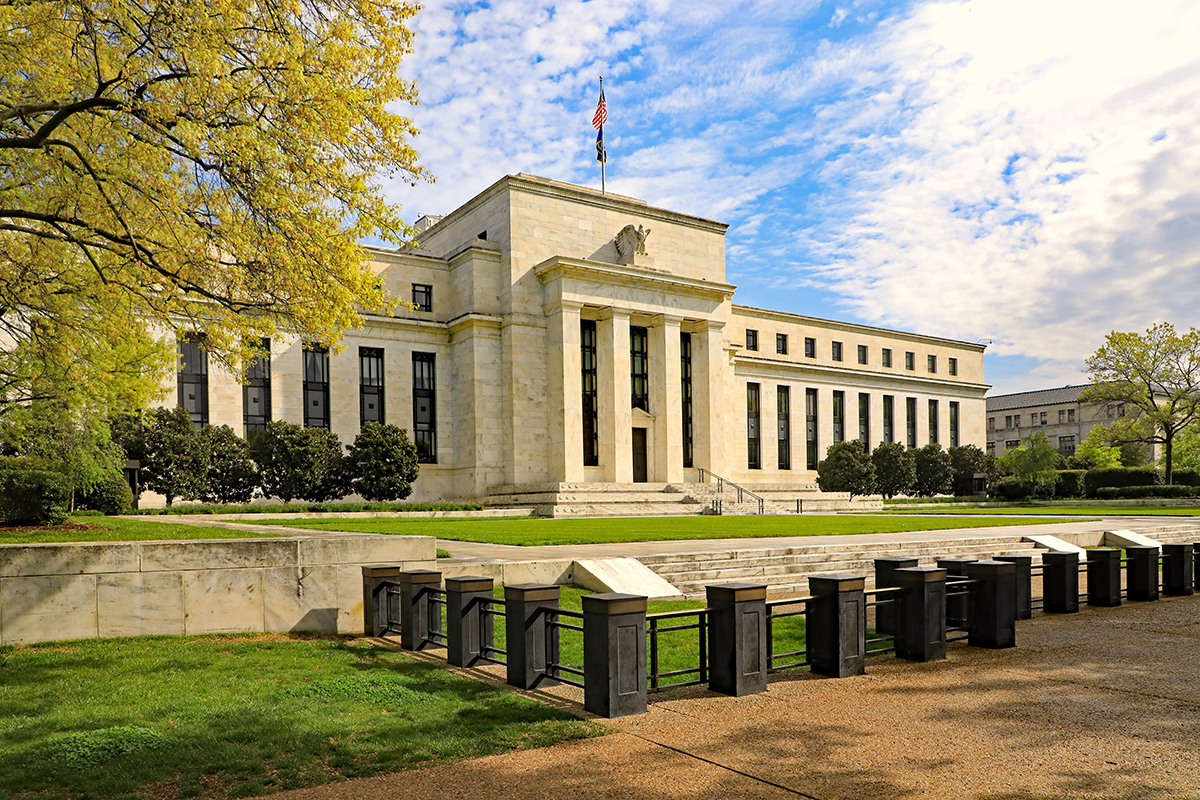
In the last Fed meeting, the focus was inflation, but policymakers are increasingly divided over how long they can afford to wait. The Fed held rates steady at the 3.5%–3.75% range, but three officials dissented in favor of a .25% hike. The debate centers on whether recent improvements in inflation are durable or whether renewed energy and other supply shocks could push prices higher again. The Fed continues to emphasize its 2% inflation target and appears unwilling to simply “look through” temporary shocks if inflation begins to spread into broader areas.
Middle East tensions could quickly reverse some of the recent inflation progress. This uncertainty has increased the possibility of another rate hike and reduced market conviction around the Fed’s next move.
Financial markets are already providing some additional tightening, potentially reducing the need for immediate rate increases. Following the Fed’s decision, bond yields rose sharply, with the 30-year Treasury reaching its highest level since 2007. Tighter financial conditions increase borrowing costs across the economy and can do some of the Fed’s work by slowing demand.
“In the last Fed meeting, the focus was inflation, but policymakers are increasingly divided over how long they can afford to wait.”
Finally, the labor market is cooling and increasingly supports patience, but not necessarily rate cuts. Although employment conditions seem to be weakening beneath the surface, the Fed appears unlikely to respond with rate cuts unless labor market weakness becomes more persistent and threatens broader employment stability.

Stocks
AI remains the dominant driver of equity markets, but the focus is shifting from the size of the opportunity to the potential fragility and concentration of the buildout. A major example is how Nvidia has become a critical supplier and a financial backstop for AI investment. This has raised concerns that vendor financing and interconnected deals could amplify volatility if confidence or spending weakens. Investors are increasingly watching whether AI demand is genuinely end-user driven or dependent on financing and continued hyperscaler capital spending.
In July, US large cap markets were fairly stable while small and mid caps pulled back. Foreign markets performed well and generated positive returns, other than emerging markets, which declined for the month.
Equities continue to show strength over the recent past and longer-term time periods. Over the last year, US and Foreign equities have been generally consistent, with outstanding total returns. Yet, we’ve seen US small caps and emerging market segments generate the largest returns, which has been a change in trend relative to the large cap momentum experienced over the last few years.
Bonds
Bond markets are adjusting to a more reactive Fed, with rates increasingly driven by incoming inflation and labor data rather than clear forward guidance. After the Fed held rates in its last meeting, two-year yields fell to about 4.2%, while 30-year yields rose to roughly 5.1%, highlighting continued concerns around inflation, fiscal supply, and the term premium. The last Fed meeting reinforces that further tightening remains a possibility if inflation stays elevated or the labor market holds up. As a result, investors should expect greater volatility in rate expectations, with upcoming inflation and employment reports playing an outsized role in determining whether the Fed holds or hikes.
As a result, longer-term bonds had a tough month in July with further total return losses. Long-term bonds are having a hard time pulling out of the slump now extending over years. Shorter-term bonds have been much more resilient and less dependent on the significant interest rate volatility experienced as of late. Although total returns haven’t been outstanding, this segment of the market hasn’t experienced the major losses like those of long-term bonds.
High yield bonds and bank loans continue to be bright spots in the fixed income world. Monthly returns have been stable and positive in some cases, supporting the longer-term returns. These bond market segments continue to remain as some of the few bond investments providing reasonably attractive returns to investors over the trailing three- and five-year periods.
© Advisory Alpha. Registration with the SEC or a state does not constitute an endorsement of the firm by regulators, nor does it indicate that the adviser has attained a particular level of skill or ability. This content is for informational purposes only and does not intend to make an offer or solicitation for the sale or purchase of any securities. Investing involves risk, including the potential loss of principal. No investment strategy, such as asset allocation or diversification, can guarantee a profit or protect against loss in periods of declining values. All investment strategies involve risk and have the potential for profit or loss. Changes in investment strategies, contributions or withdrawals, and economic conditions may materially affect the performance of your portfolio. There are no assurances that a portfolio will match or outperform any particular benchmark. Investors should carefully consider the investment objectives, risks, fees, and expenses before investing. Any financial services firms referenced in this material do not provide tax or legal advice. Please consult with your tax or legal professional regarding specific issues prior to making a tax or legal decision.
The performance information presented in the asset category section of this report is based on equal-weighted averages of the following Morningstar Categories: US Stocks (US Fund Large Blend, US Fund Mid-Cap Blend, US Fund Small-Blend), Foreign Stocks (US Fund Foreign Large Blend, US Fund Foreign Small/Mid Blend, US Fund Diversified Emerging Mkts), US Bonds (US Fund Intermediate Government, US Fund Inflation-Protected Bond, US Fund Corporate Bond, US Fund High Yield Bond, US Fund Bank Loan), Foreign Bonds (US Fund World Bond, US Fund Emerging Markets Bond), Hard Assets (US Fund Commodities Precious Metals, US Fund Commodities Energy, US Fund Global Real Estate, US Fund Real Estate), Hybrid Assets (US Fund Convertibles, US Fund Preferred Stock).
© 2026 Morningstar. All Rights Reserved. The information contained herein: (1) is proprietary to Morningstar and/or its content providers; (2) may not be copied or distributed; and (3) is not warranted to be accurate, complete, or timely. Neither Morningstar nor its content providers is responsible for any damages or losses arising from any use of this information. Past performance is no guarantee of future results. Morningstar category data is provided for illustrative purposes only to demonstrate a hypothetical investment vehicle represented by a group of similar investments. Morningstar category data is an aggregation across actual funds contained in the category, but it is not possible to directly invest in a category. Index returns are provided for illustrative purposes only to demonstrate a hypothetical investment vehicle using broad-based indices of securities. Unmanaged indexes are not available for direct investment. All data shown does not include internal fund expenses, trading costs, financial advisor fees, commissions, or taxes. This information is not intended to predict the performance of any specific investment or security. Past performance is no guarantee of future results.
Bureau of Labor Statistics. Unemployment Rate, Total Nonfarm Employment, Labor Force Participation, Consumer Price Index, Producers Price Index. www.bls.gov. United States, Department of Commerce, Bureau of Economic Analysis. Personal Consumption Expenditures, Gross Domestic Product, Consumer Spending, Personal Income, and Outlays. www.bea.gov. Federal Reserve. Fed Funds Rate, Fed Funds Target Range, Minutes of the Federal Open Market Committee, Board of the Federal Reserve System Calendar. www.federalreserve.gov. Trump, Donald. @realDonaldTrump. Truth Social.